The Future Runs on AI.Their Education Should Too.

Not screen time. A place for creation, community, and curiosity, while teaching the most important skills of our time.

Explore

The Gap

AI isn't a skill to learn. It's cognitive infrastructure, and your child can grow up with it built in.

Kids are natural world-builders. They imagine kingdoms, invent creatures, design rules for how things work. Luminary channels that instinct into something lasting: the mental architecture to think in systems, create with intention, and direct AI as a creative partner.

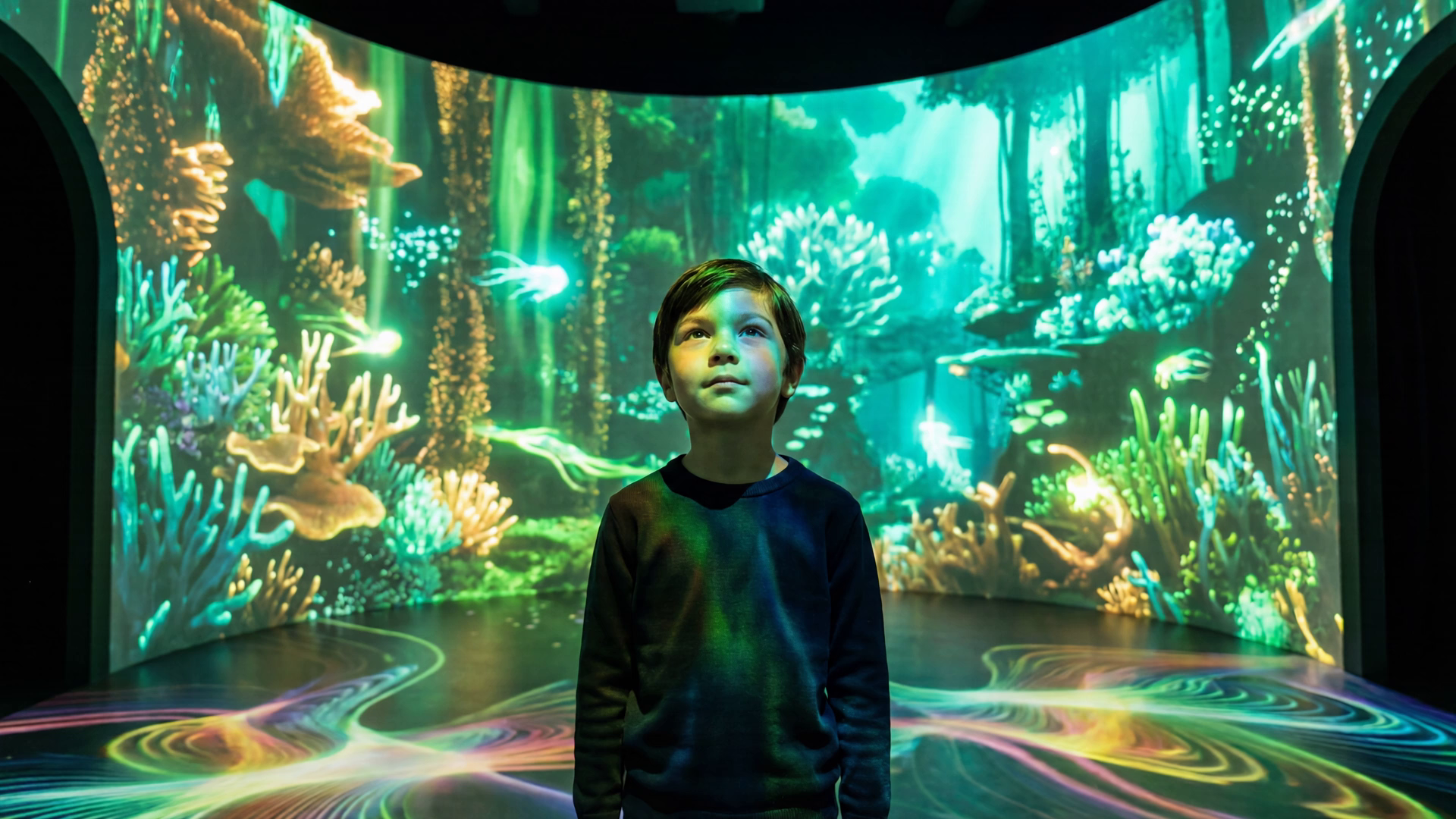
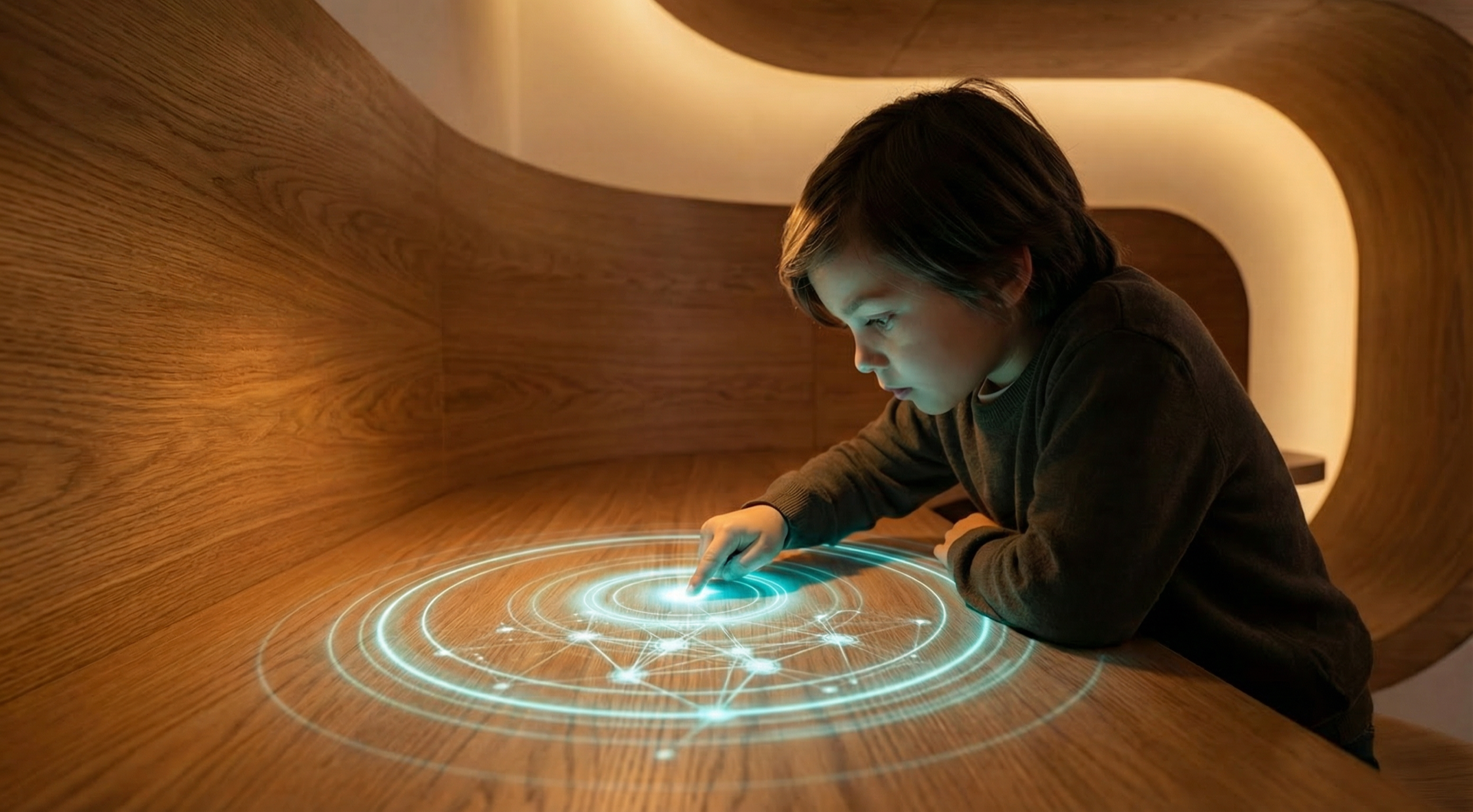
They walk in with an idea. We provide the AI tools, the human facilitators, and the immersive environment. They walk out with a world they can stand inside, projected on every surface at room scale.

Fun first. The cognitive architecture follows.

Who It's For

Built for Young Creators, Ages 6–10

After-school and weekend enrichment where kids build worlds with their hands, translate them with AI, and step inside them at room scale.

Kids (Ages 6–10)

After-school · Weekends · School Holidays

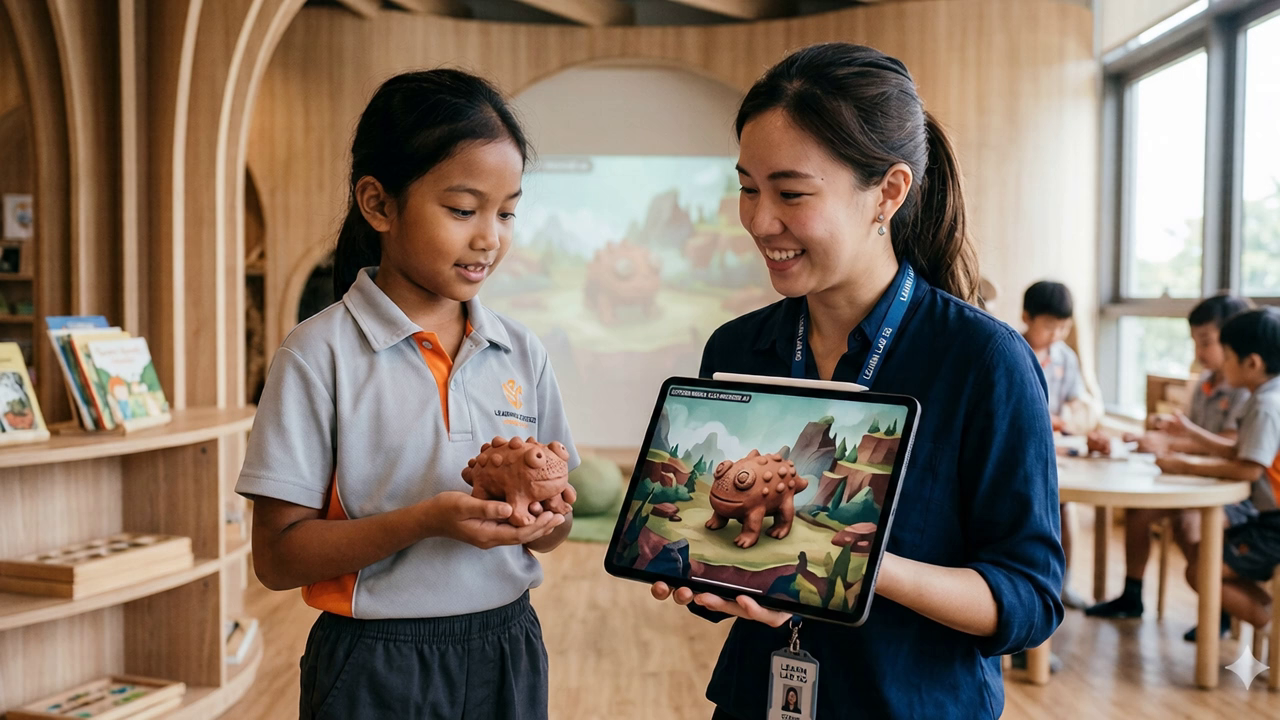
Fantasy kingdoms, alien civilizations, underwater cities, built with clay and blocks, translated by AI, then projected at room scale around them. They walk out with a world they made and the thinking skills that built it.

Systems ThinkingCreative ConfidenceAI FluencyStructured Reasoning
Explore the full curriculum

Coming Soon

The same methodology, expanding to new audiences.

Families
Coming Soon

Families

Weekend workshops across generations

Teams
Coming Soon

Teams

Corporate innovation experiences

Adults
Coming Soon

Adults

Heritage preservation and upskilling

The Experience

Imagine It. Build It. Step Inside It.

Every session follows the same arc: arrive with an idea, shape it with your hands, translate it with AI, and walk through the finished world projected around you.

Step 1Human-ledThink

Arrival + Orientation

Your child walks through the sculptural corridor and into the studio. Their facilitator sets the tone: 'Today, you're going to build a world.' Not a classroom. A creation space.

Step 2AI + Human in the LoopThink

Meet Your AI

They settle into a pod and name their AI companion. It appears on a screen built into the pod wall, a friendly guide that listens, asks questions, and helps bring their ideas to life.

Step 3AI + Human in the LoopExplore

Choose Your World Seed

Pick a starting concept from curated seeds: fantasy kingdom, underwater city, jungle civilization, floating islands. This avoids blank-canvas paralysis while preserving creative freedom.

Step 4AI + Human in the LoopCreate

Describe → Visualize

They describe their world's features: landscape, creatures, weather, rules. AI generates visuals immediately. They see what their words create, and what they miss.

Step 5Peer-ledCollab

Explore + Share

The World Gallery opens. Children see what others are building, visit each other's worlds, and find ways to connect their creations. Collaboration emerges naturally.

Step 6AI + Human in the LoopExperience

Change One Thing

They modify one variable deliberately. Remove water. Add a predator. Change the seasons. AI shows the consequences rippling through their world.

Step 7Human-ledReflect

Reflection + Story

The facilitator gathers the group. What happened to your world? What surprised you? What would you change? The human leads meaning-making. AI can't do this part.

Step 8Human + AIReflect

Save + Takeaway

They walk out with a world card, a printed artifact of the world they built, the choices they made, and what emerged. Proof of what they created, not just a memory of an afternoon.

Save + Takeaway

The Partnership

Two Guides, One Journey

Every session is co-led by a human facilitator and an AI companion. Each plays a distinct role in your child's journey. Together, they create something neither could alone.

Your Child's Facilitator

  • 1Creates a safe, exciting environment
  • 2Guides reflection: "What changed in your world? Why?"
  • 3Encourages collaboration between children
  • 4Reads the room and adjusts the experience in real time

Your Child's AI Companion

  • 1Visualizes their ideas instantly
  • 2Asks clarifying questions to sharpen their thinking
  • 3Simulates consequences of their choices
  • 4Remembers their preferences and adapts over time

The Handoff Principle

Human leads at start
AI leads during creation
Human leads at reflection
“What happens if I change one thing?”

The question every session teaches them to ask

The Learning Flywheel

How Learning Actually Happens

A continuous cycle where human creativity and AI capability build on each other. Every loop sharpens thinking.

HumanStage 1

World Ideas

“I want a jungle with talking animals and a river that goes upside down”

AIStage 2

AI Interpretation

AI translates description into visual elements

HumanStage 4

Response & Revision

“Make the river go through a cave! And the animals can glow in the dark.”

AIStage 3

Visible Outcome

The world appears. Does it match the vision?

“Learning emerges because children repeatedly ask: ‘What happens if...?’”
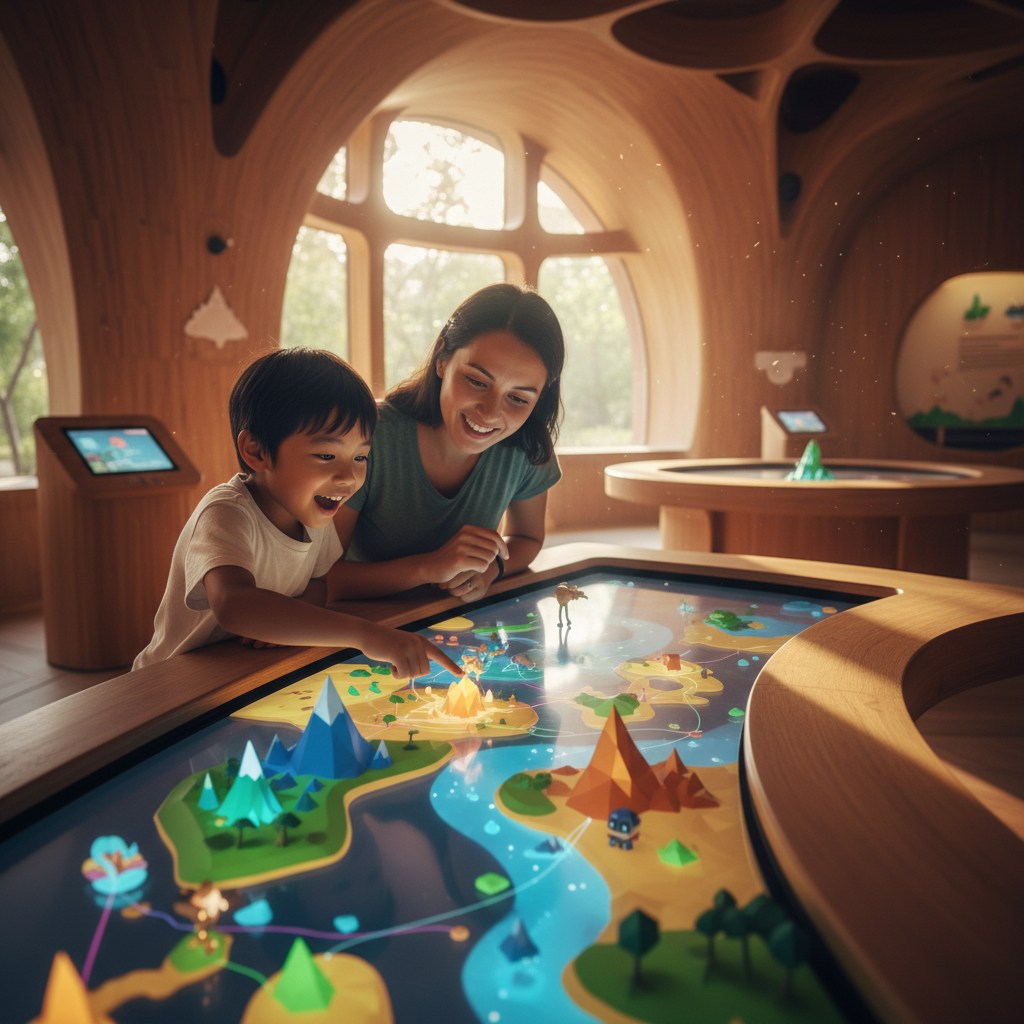
A child interacting with a swirling projected world on a wooden table

The Space

An Environment Designed for Infinite Possibilities

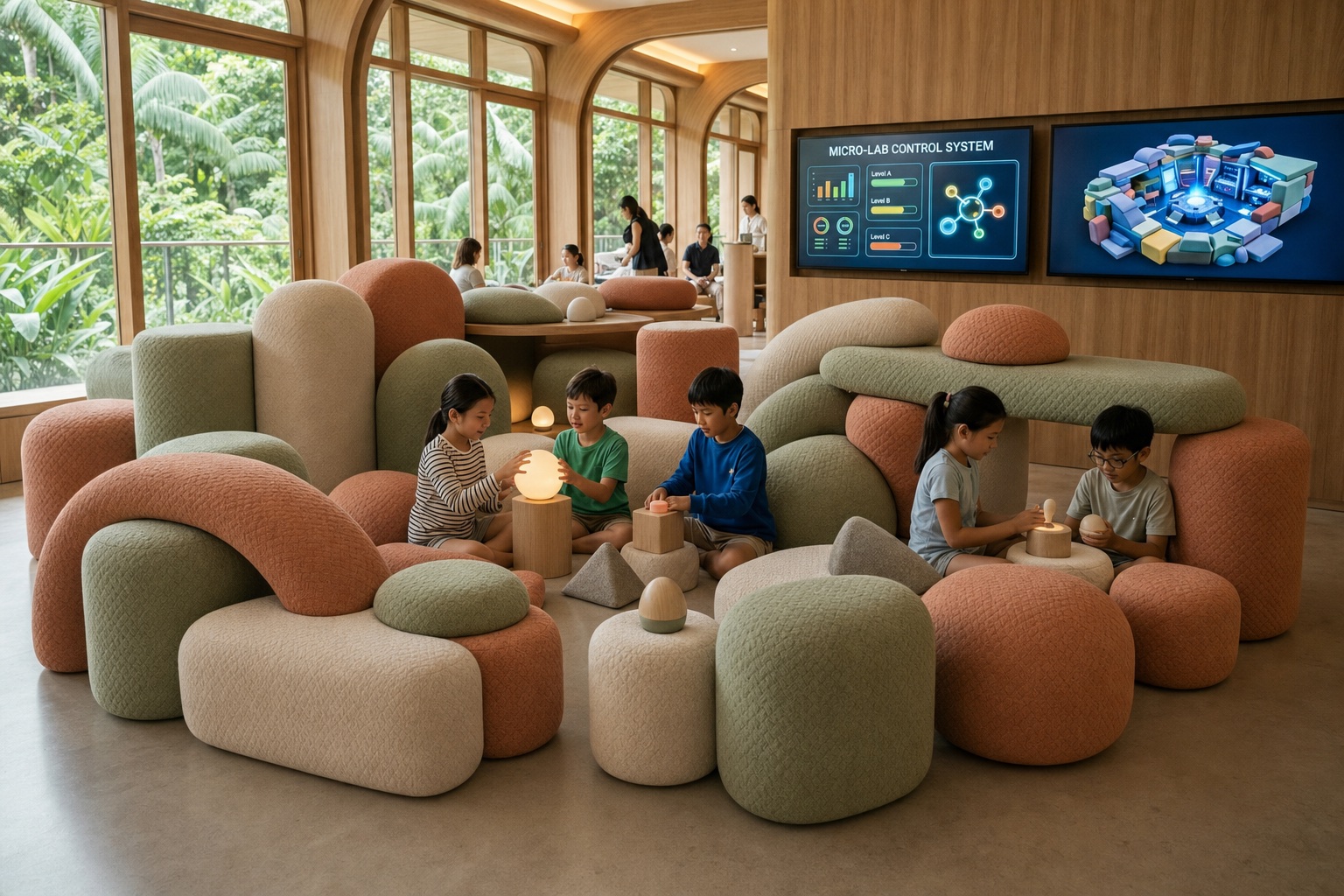
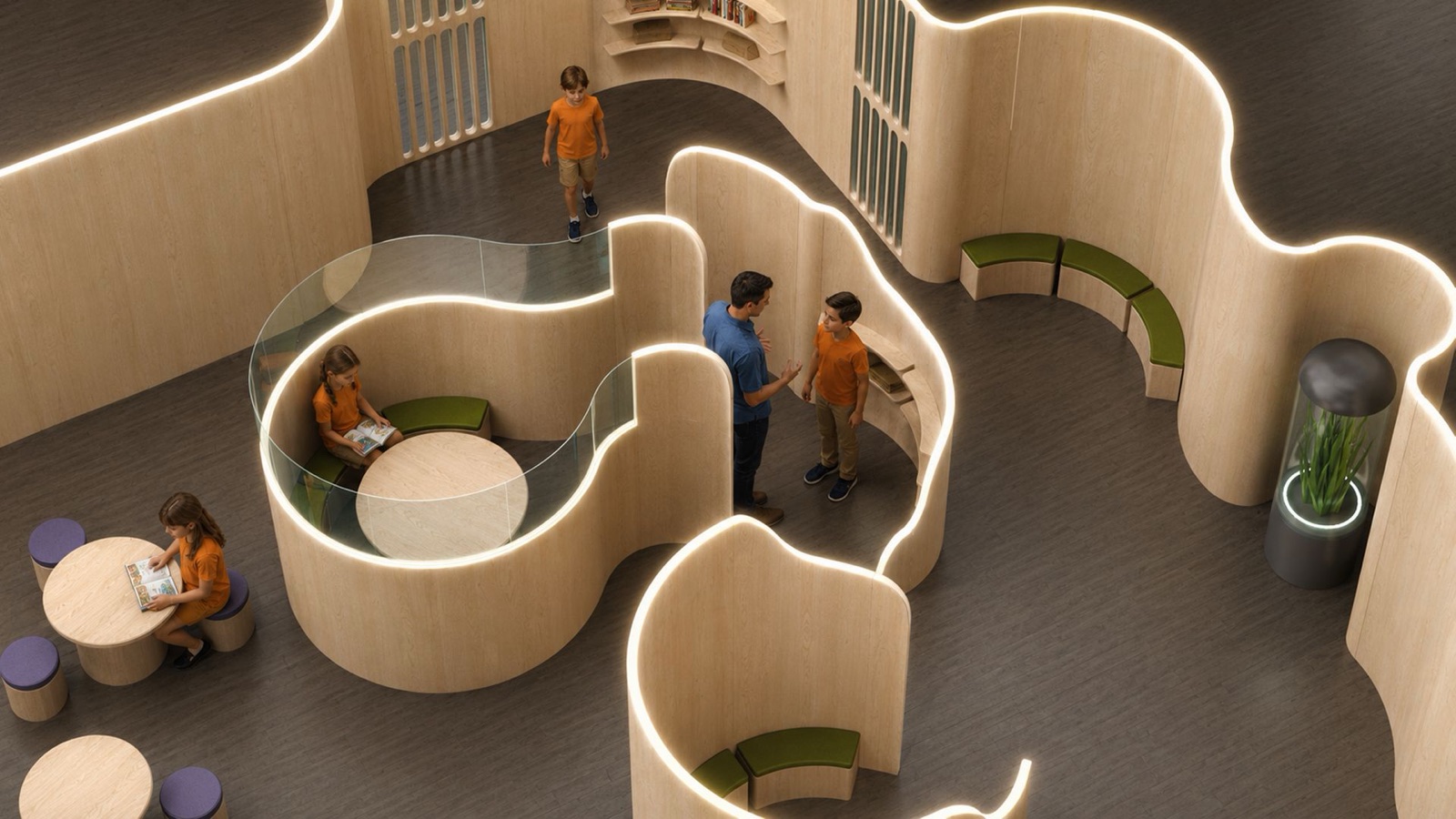
Zones dedicated to different types of exploration, creation, reflection, and experience. Sculptural plywood pods, chunky solid-wood furniture, ceiling-mounted projectors, and felt-lined interiors, all designed to reconfigure in under two minutes.

Six zones. Six completely different experiences. One environment.

Reading nooks, quiet discovery
01. Think

Reading nooks, quiet discovery

Children settle into curved sculptural pods with books and projected starscapes. A cozy space to explore ideas, browse inspiration, and begin imagining the world they want to build.

Interactive floor, full-body play
02. Explore

Interactive floor, full-body play

The floor comes alive with projected patterns, ecosystems, and reactive visuals. Children kneel, crawl, and interact directly, discovering cause and effect through whole-body exploration.

Making zone, physical to digital
03. Create

Making zone, physical to digital

Chunky wooden tables, building blocks, clay, and drawing materials. Children construct physical models of their world while a facilitator guides them through the creative process.

Amphitheater, show and tell
04. Collab

Amphitheater, show and tell

Children take turns presenting their worlds to the group in a curved amphitheater. Their creations are displayed on shelves behind them. The audience sits on cushions, asking questions and sharing ideas.

Open floor, total immersion
05. Experience

Open floor, total immersion

All furniture pushed to the edges. The room goes dark. Projectors cover every surface. Walls show towering landscapes, the floor becomes an ocean. Children walk through their world.

Pods, journaling, takeaway
06. Reflect

Pods, journaling, takeaway

Back in the circular pods, children write and draw about what they built and what they learned. A quiet moment to process the experience before taking their world card home.

How the Zones Flow

The environment reconfigures 3–5 times per session. All furniture is lightweight, stackable, and movable by the children themselves. The only permanent infrastructure: ceiling-mounted projector rails and power drops.

Think
Explore
Create
Collab
Experience
Reflect

Explore the Environment

Click any image to expand

Overhead view of Luminary environment showing pods, craft tables, building blocks, and projection zones working together

Modular by Design

Every Component Is a Product

Luminary isn't just a centre — it's a modular product platform. Furniture, tactile IoT devices, projection systems, and digital experiences are designed as layers that work together in a flagship space, a franchise location, or a child's living room.

What we build for the centre becomes a product line. Every layer extends the platform.

Child relaxing in a curved sculptural plywood pod with felt lining and warm globe light

Sculptural Pods

Curved plywood pods sized for small groups. Felt-lined interiors with embedded screens. The same pods work in a centre, a franchise, or as standalone home furniture.

Luminary Primitive — tactile IoT device with light, dial, and button controls in birch and felt

Luminary Primitives

Abstract, tactile IoT devices — orbs, cubes, pyramids, domes — that children touch, twist, and shake. When placed on the furniture, they bring the environment to life through light, sound, and haptics.

Children building forts and structures with AI-enabled sculpting blocks

Sculpting & Fort Blocks

Modular foam blocks in organic shapes. Kids build forts and landscapes at the centre — and the same blocks ship as premium home play furniture. The physical foundation of every Luminary experience.

Child standing inside a projected world filling the room

The Portal Home

At the centre, projection fills every surface. At home, a birch plywood archway with an integrated projector becomes a physical window into the world they built — connecting the Luminary experience to daily life.

Pilot Launches Q3 2026 | Ages 6–10

Reserve a Spot for Your Child

Be among the first families at Singapore's first AI-powered enrichment programme. Founding family rates for early signups. Limited to 12 children per cohort.