The Curriculum
The Essential Skills for the AI Age
Luminary teaches AI literacy to children ages 6–10 through the most natural method: building worlds.
After-school, weekend, and school holiday programmes — at Luminary centres and partner locations.
The First Moment
It Starts With a Spark
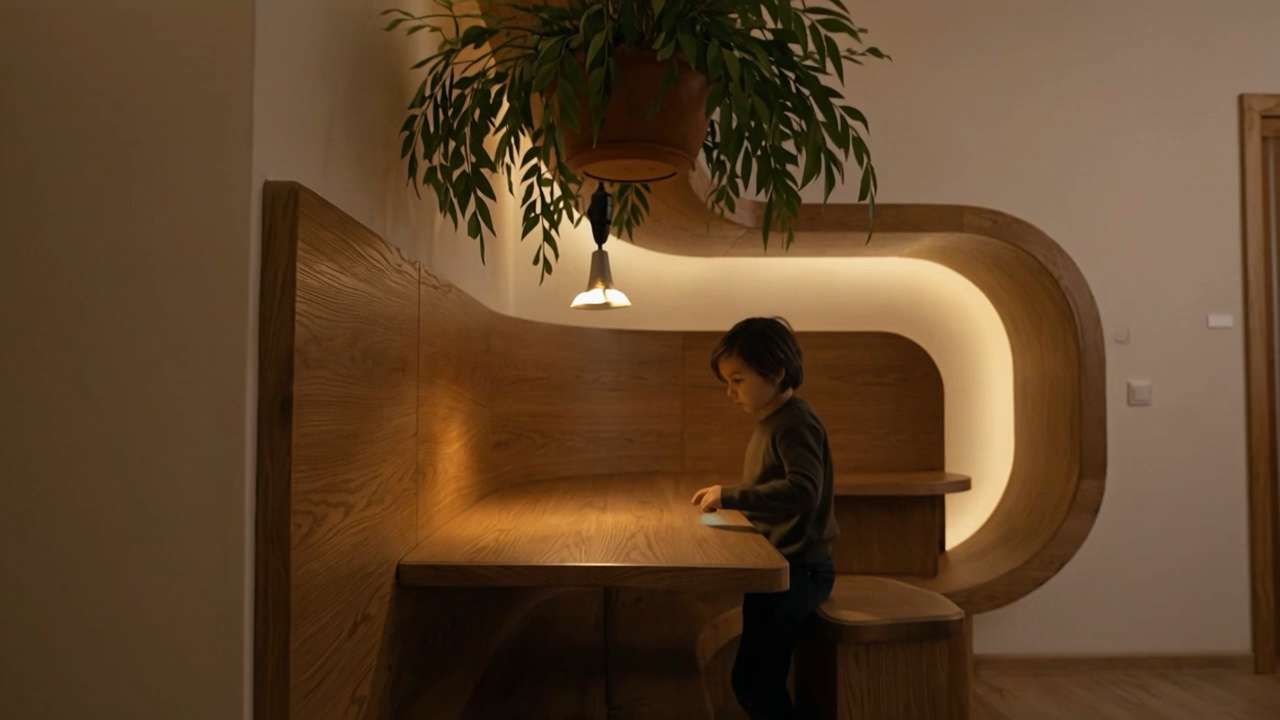
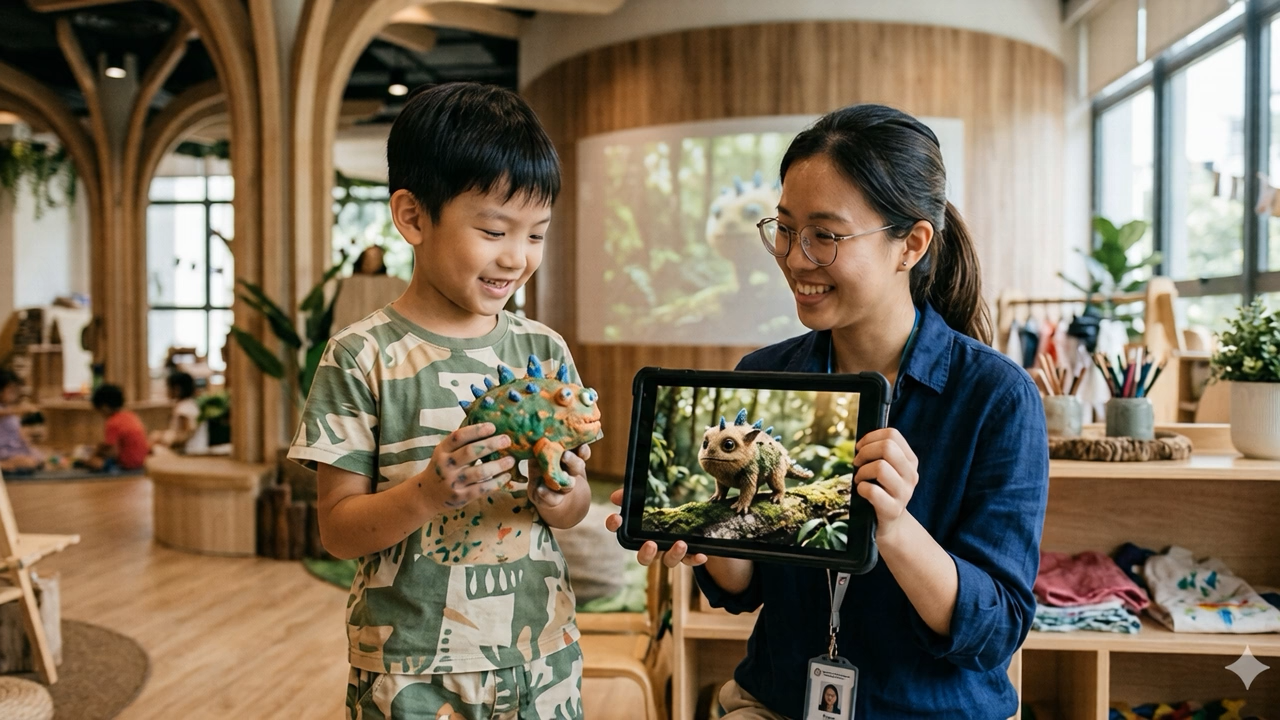
Watch your son's face when the creature he just described (half unicorn, half dinosaur, with a magical parrot friend) appears on screen exactly as he imagined. Something shifts in that moment.
He leans forward. He starts asking questions. ‘Can it have wings? Can the parrot talk?’ He is no longer a spectator. He is a creator. And he is just getting started.
What They'll Learn
Five Skills That Will Define Their Future
Every session at Luminary is designed to build these core capacities, not through worksheets or lectures, but through the act of creating worlds together.
01AI Literacy
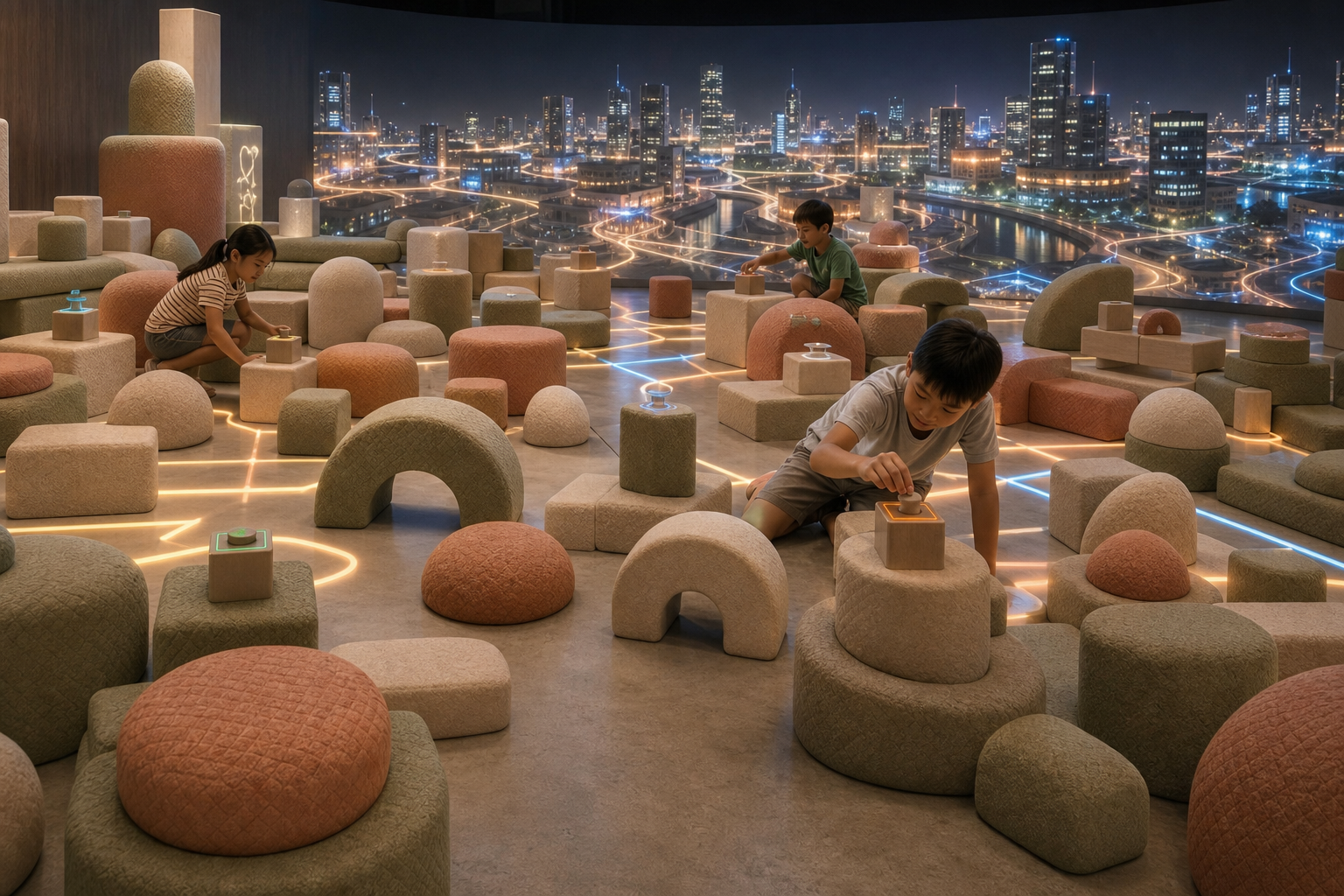
Understand how AI works, what it can do, and how to use it as a creative partner, not just a consumer.
 02
02Systems Thinking
See how things connect. Map cause and effect, spot feedback loops, and anticipate what happens next.
 03
03Creativity
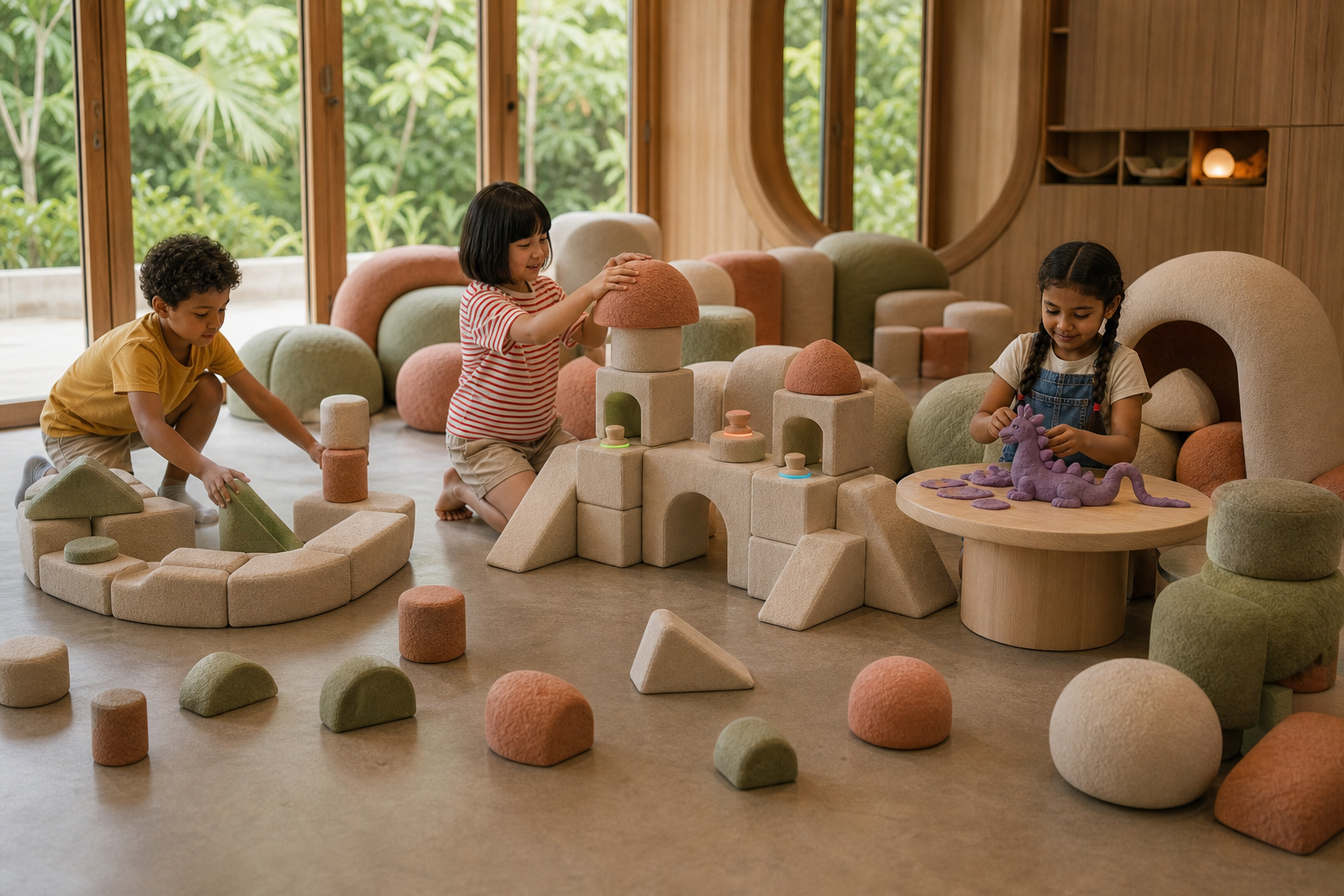
Imagine worlds that don't exist yet. Design characters, environments, and rules from scratch.
 04
04Collaboration
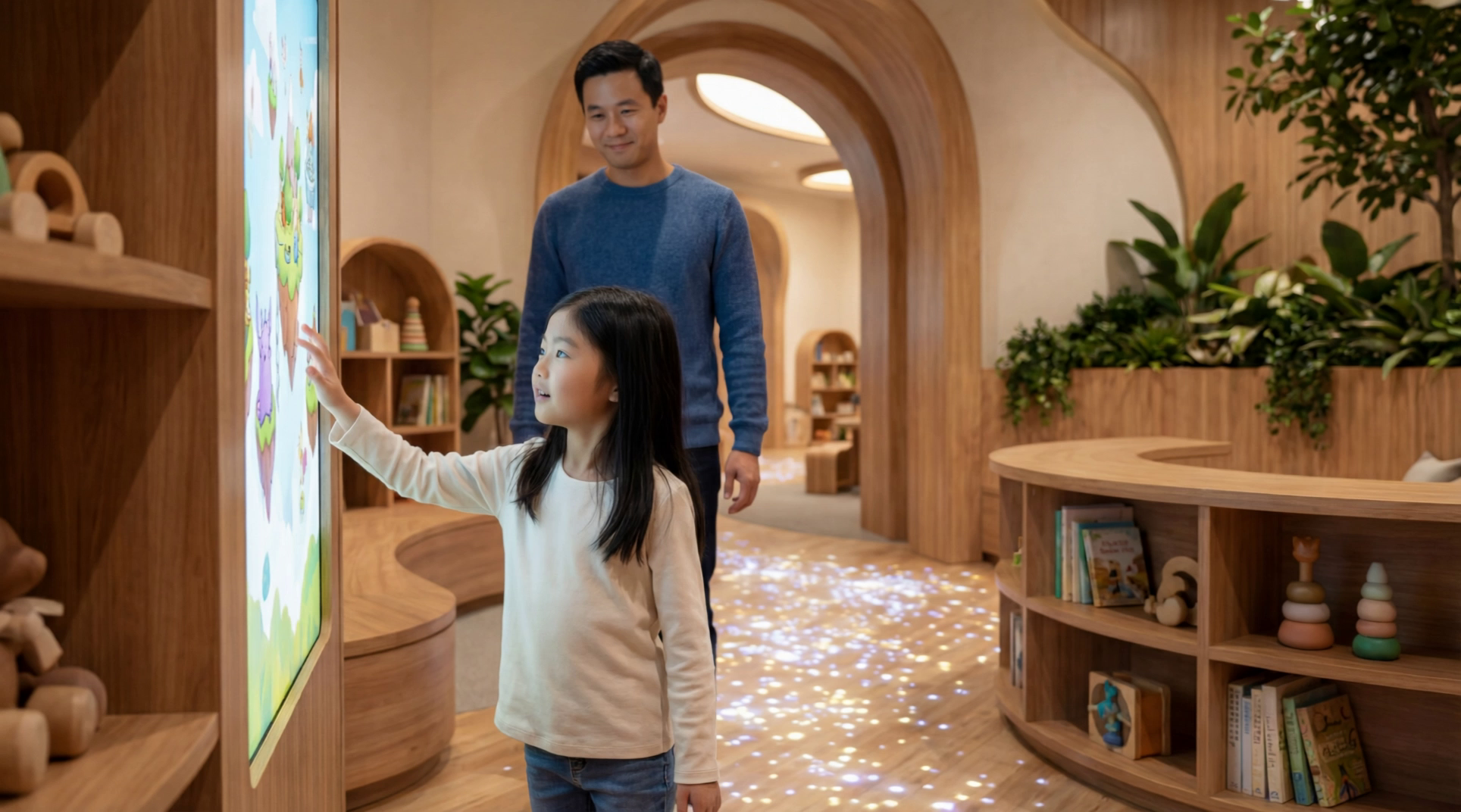
Build together. Negotiate decisions, share ideas, and learn that the best worlds are co-created.
 05
05Curiosity
Ask better questions. Wonder what would happen if. Follow threads that surprise even the facilitator.
Theme & Scale
The Same Principles, Infinite Worlds
Regardless of theme, the same world-building principles apply, from ecosystems to enterprises, from households to hybrid futures.
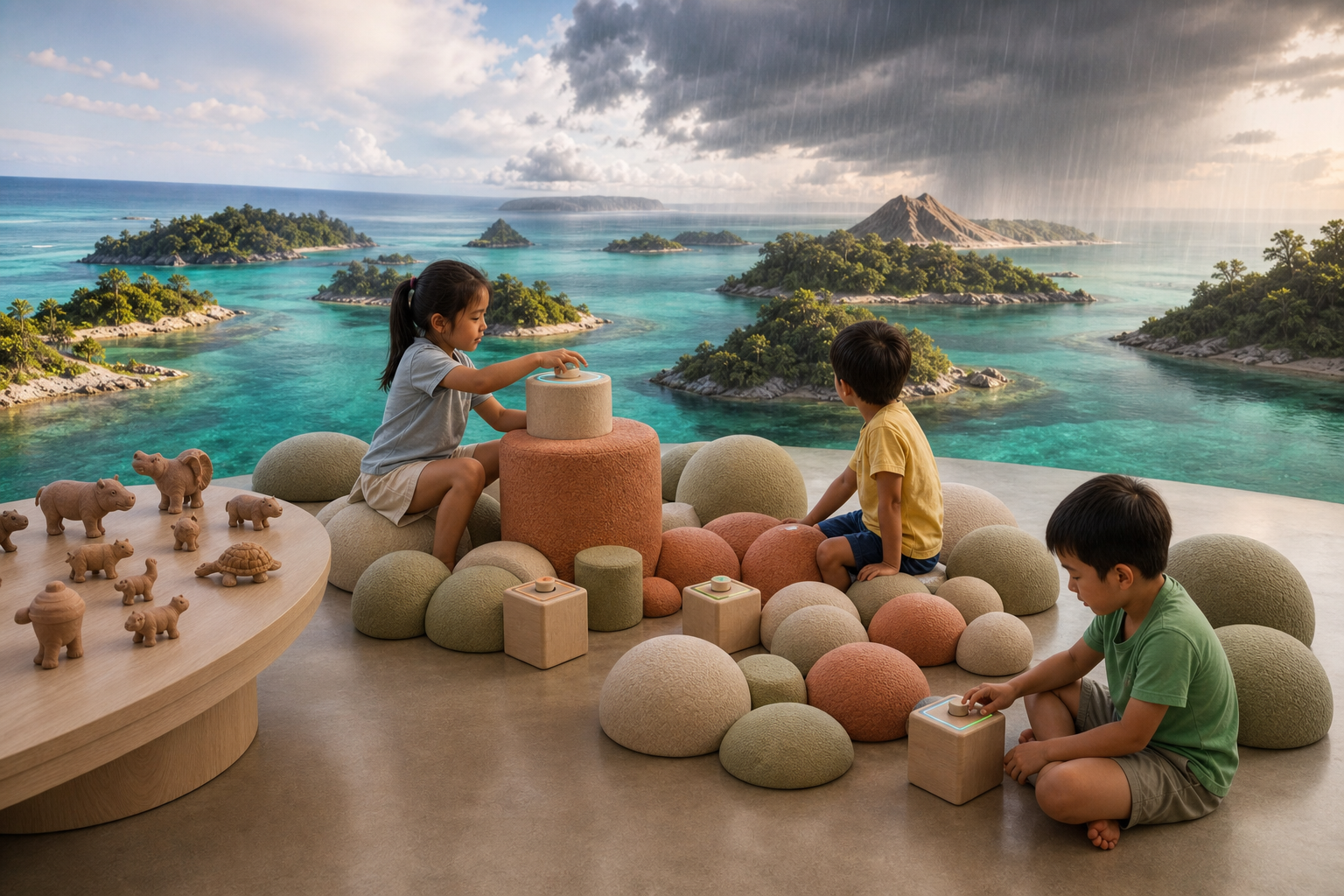
Ecological Worlds
Local habitat → Planetary ecosystem
- Design flora and fauna
- Map interdependencies between species
- Analyze external pressures like climate and resources
- Seek balance, resilience, and sustainability
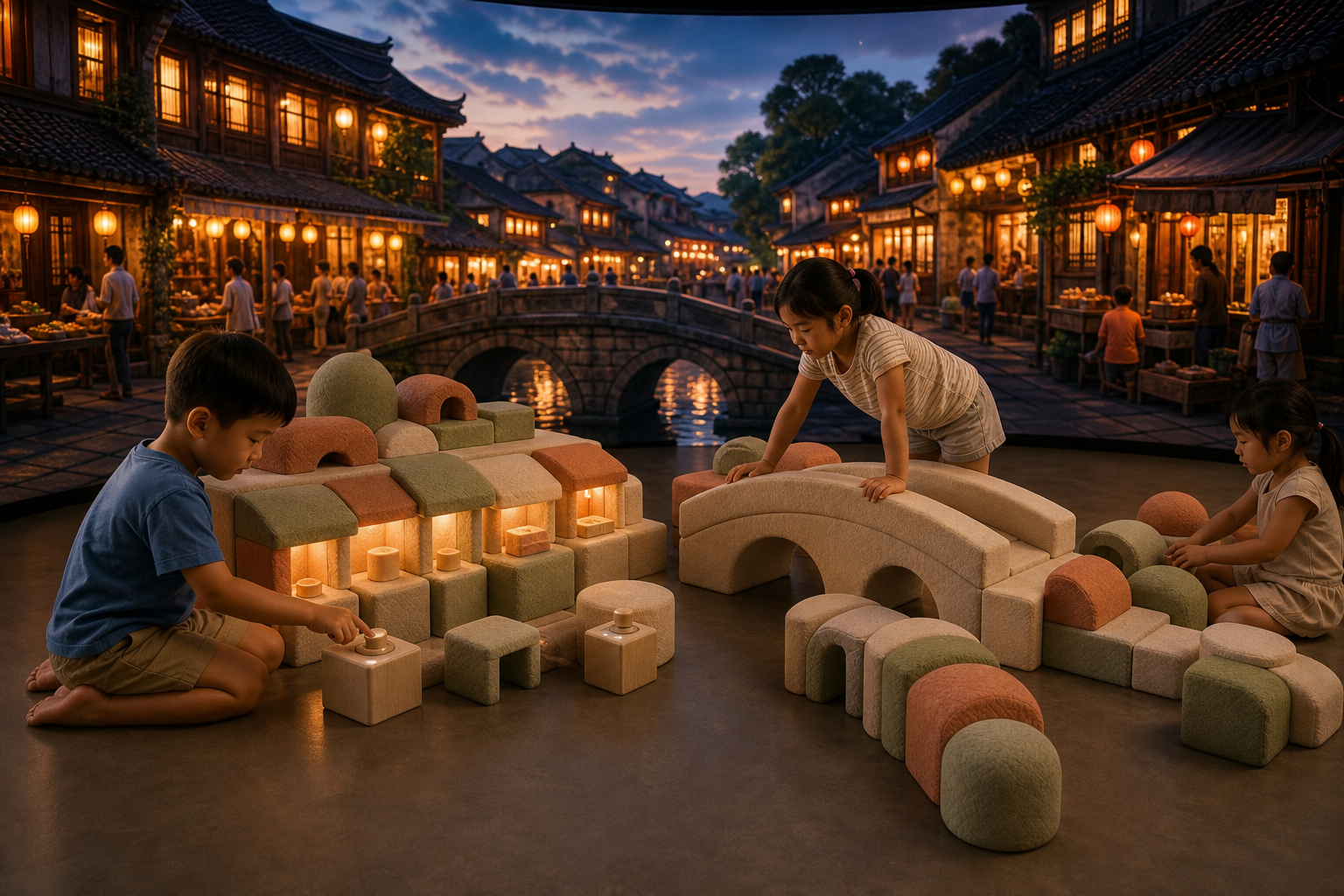
Civic & Social Worlds
Household → City
- Design personas and social roles
- Map flows of resources and responsibilities
- Explore cooperation, conflict, and governance
- Design for coordination and shared benefit
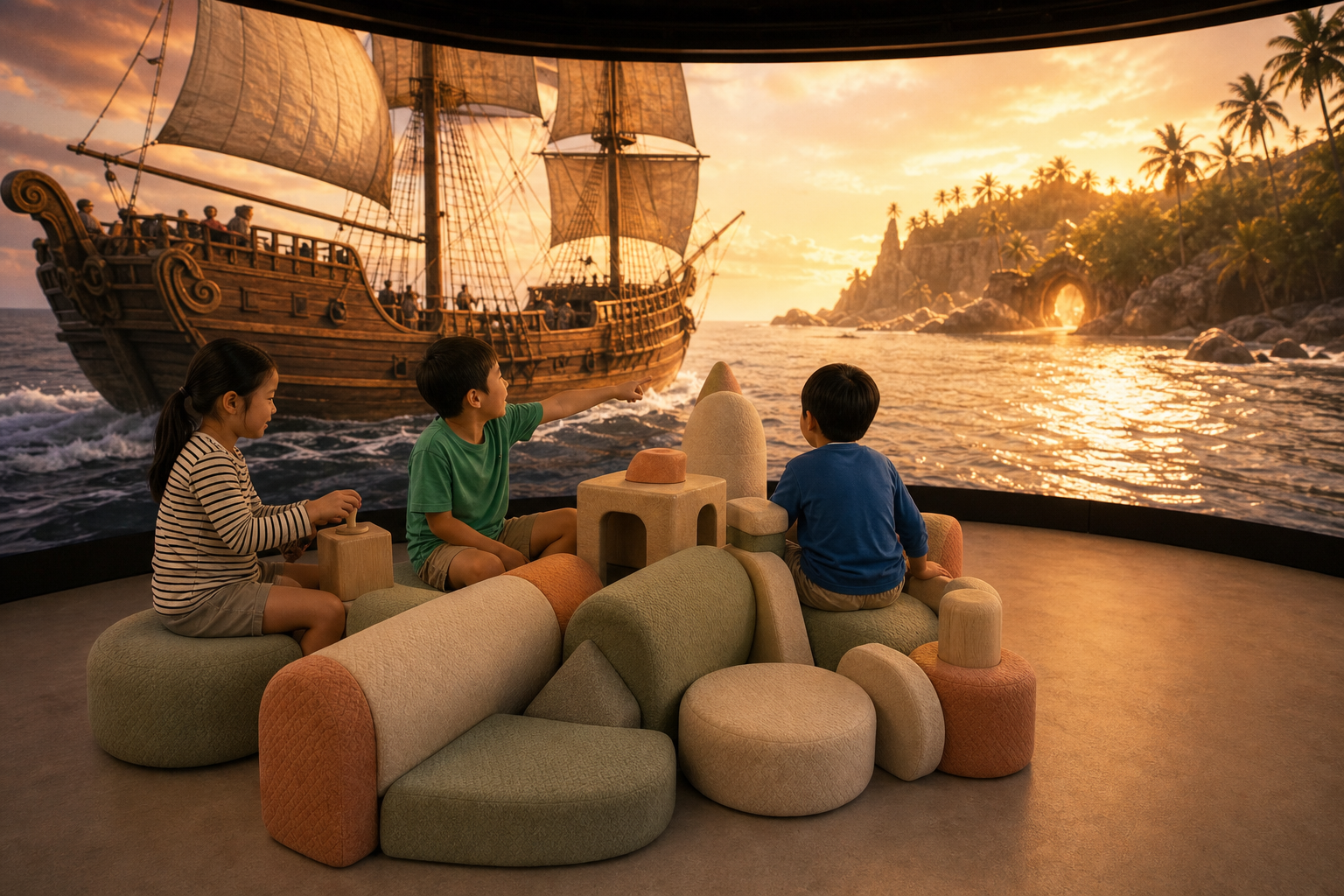
Story & Adventure Worlds
A single quest → An unfolding saga
- Create characters with goals and motivations
- Design challenges that require problem-solving
- Map cause and effect across branching storylines
- Discover how choices reshape the world
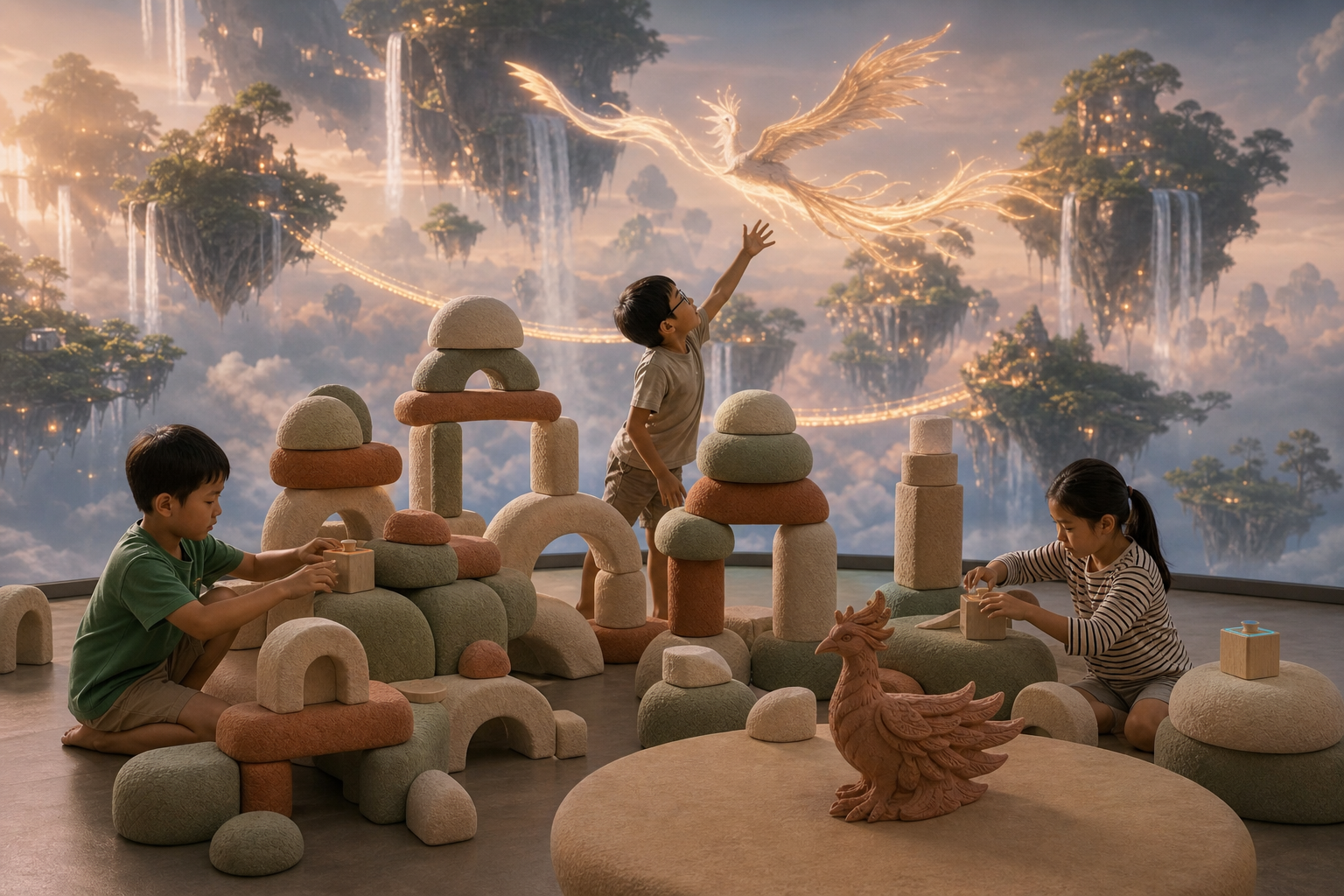
Fantasy & Hybrid Worlds
Imagined futures → AI-native societies
- Build AI-native societies and robotic ecosystems
- Design autonomous cities
- Mix physical and digital environments
- Explore imagined futures
Scaled for Ages 6–10
For our primary age group, worlds start simple and grow in complexity across a term. A 7-year-old might begin with a single island ecosystem. By the end of a 10-week programme, they're managing interconnected biomes with weather systems, food chains, and trade routes between civilizations.
The same framework scales to adult learners. Corporate teams build market ecosystems, families reconstruct heritage worlds. But the entry point is always age-appropriate wonder.
The Process
How World Building Works
Every session follows a structured creative process designed for young learners, from vision to simulation to refinement. Each step builds on the last.
Establish Theme, Intent & Constraints
Define the world's purpose, boundaries, and creative direction.
Design Key Artifacts & Actors
Create the entities, objects, and characters that populate the world.
Map Relationships & Flow
Connect everything: resources, energy, information, influence.
Simulate Impact Over Time
Run the world forward. What happens when systems interact?
Evaluate Emergent Impacts
Discover what the system produces that nobody planned.
Adjust Structure & Balance
Tune incentives, rebalance power, fix what breaks.
Refine the Vision
Evolve your world based on what you've learned.
The Architecture
What We Actually Teach
Our curriculum integrates three layers: AI literacy foundations, world-building systems, and capacity development.
AI Literacy Foundations
Thinking capacity
- AI Systems & Tooling
- Design Thinking
- Systems Thinking
- Data Literacy
- Ethics & Governance
- Communication
Operational Skills
Operational capacity
- Prompt Design
- Context Framing
- Iteration Loops
- Troubleshooting
- Evaluation & Verification
World Building Systems
Environmental capacity
- Simulate Over Time
- Evaluate Emergent Behavior
- Adjust Structure & Incentives
- Govern & Iterate
The Learning Arc
Six phases, mirrored by the space itself
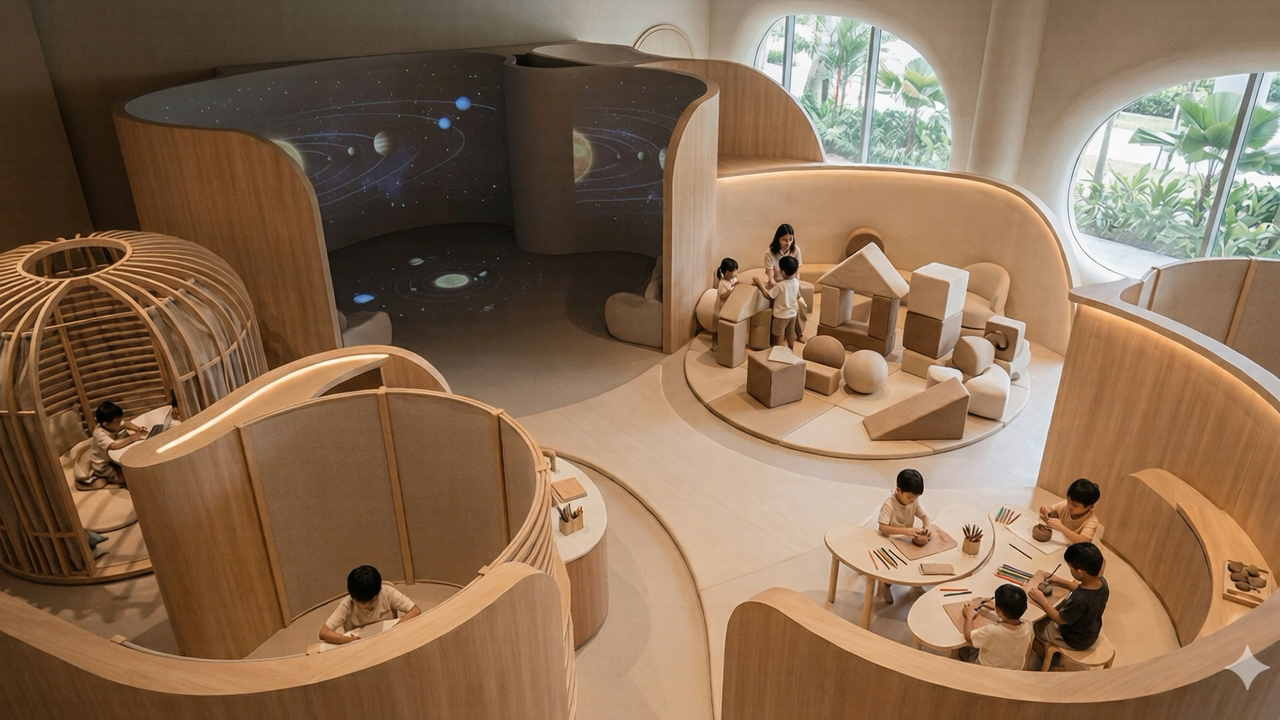
Each session moves through six phases, assembled from a small set of interaction models. The room's six zones mirror these phases — so the space itself teaches the arc.
Think
Clarify ideas with AI
Explore
Adjust variables, watch the system respond
Create
Turn ideas into living elements
Collab
Compare, discuss, co-create
Experience
Feel systems behave under pressure
Reflect
Explain it, and take it home
The curriculum progression
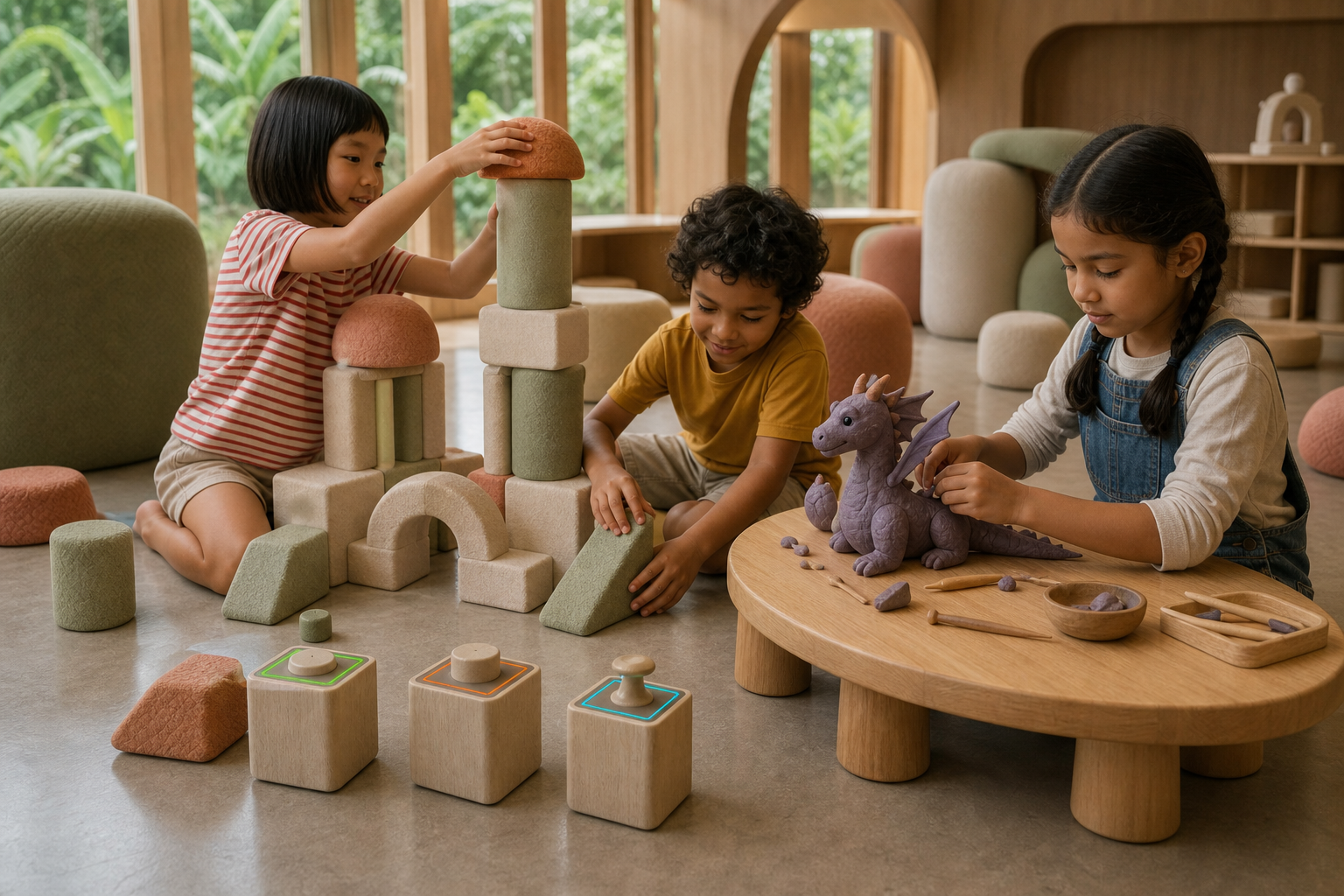
Create & Calibrate
IntroductionBuild systems from scratch and explore cause and effect.
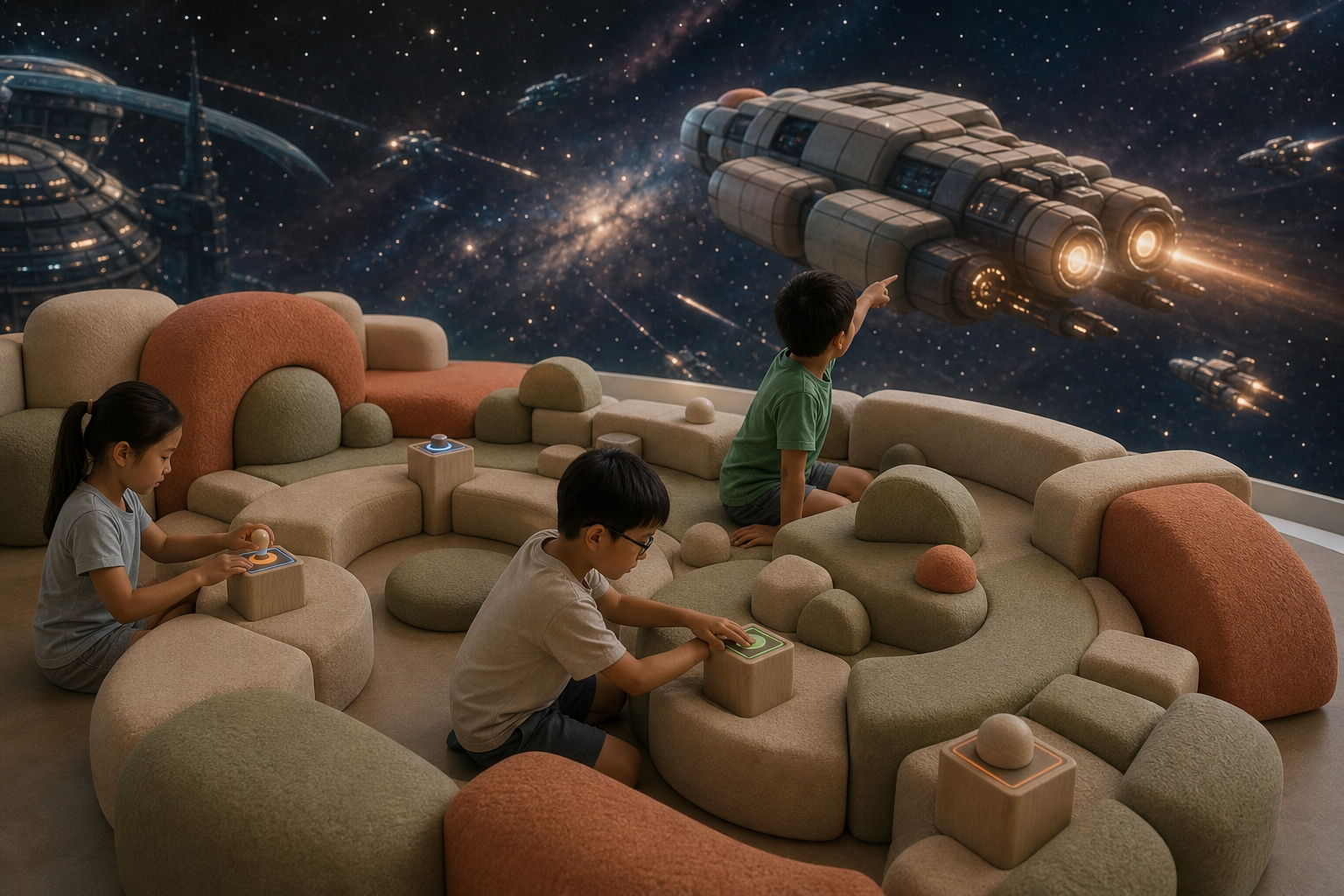
Operate & Maintain
IntermediateRun complex, interconnected systems together in real time.
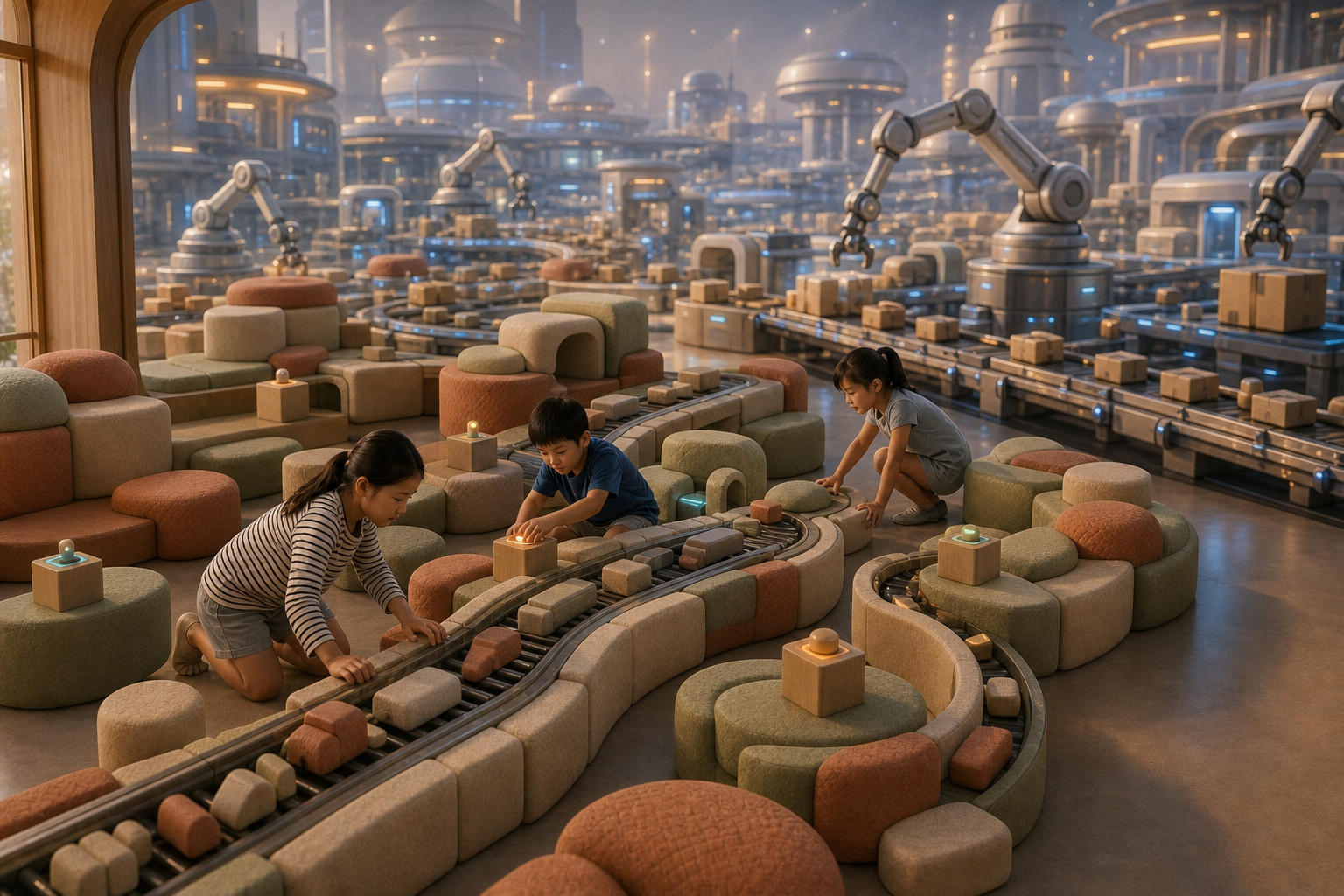
Analyze & Improve
AdvancedEvaluate systems, find inefficiencies, and optimise performance.
Why This, Why Now
Play is coming back into the room
Imagination shaped worlds
A cushion became a spaceship, a cardboard box became a throne. Children transformed the physical world through pure imagination.
Worlds moved to screens
Digital experiences made those worlds richer, but moved them behind glass. Interaction became abstract and individual.
Physical worlds, brought to life
Luminary brings imagination back into the room, where environments are built, shared, and made responsive through AI.
Understanding emerges through participation, not explanation
Children don't observe the system from the outside — they become part of it.
Traditional learning
- •Linear and individual
- •Abstract and theoretical
- •Static cause and effect
- •Students observe systems
The Luminary approach
- •Distributed and collaborative
- •Physical and interactive
- •Dynamic and unpredictable
- •Students become part of the system
A Different Approach
Not Another Screen
We know the concern. More tech, more screen time? Luminary is the opposite. Technology here is a creative tool, not a distraction. Tactile interfaces, physical materials, collaborative spaces, and expert facilitators ensure the experience is deeply hands-on.
The AI is invisible. Your child never stares at a chatbot. They create through touch, voice, and movement. The immersive room is not virtual reality. It is their creation projected into physical space. They are standing in it, not escaping into it.
Programme Formats
Flexible Enrichment Options
Luminary fits into your family's schedule with three programme formats, all using the same world-building curriculum.
After-School
Weekly, 2 hours
One session per week during term time. Children build their world incrementally across a 10-week programme.
Weekend
Saturday or Sunday, 3 hours
Extended sessions with deeper exploration. Includes the full immersive walkthrough experience.
Holiday Camp
5-day intensive
A complete world-building journey in one week. From first idea to full immersive experience on day five.
Aligned with Singapore's 21st Century Competencies framework: critical thinking, communication, collaboration, and invention thinking.
Join the Waitlist
Join the Founding Cohort
After-school, weekend, and school holiday programmes for ages 6–10. Be among the first families to join.